
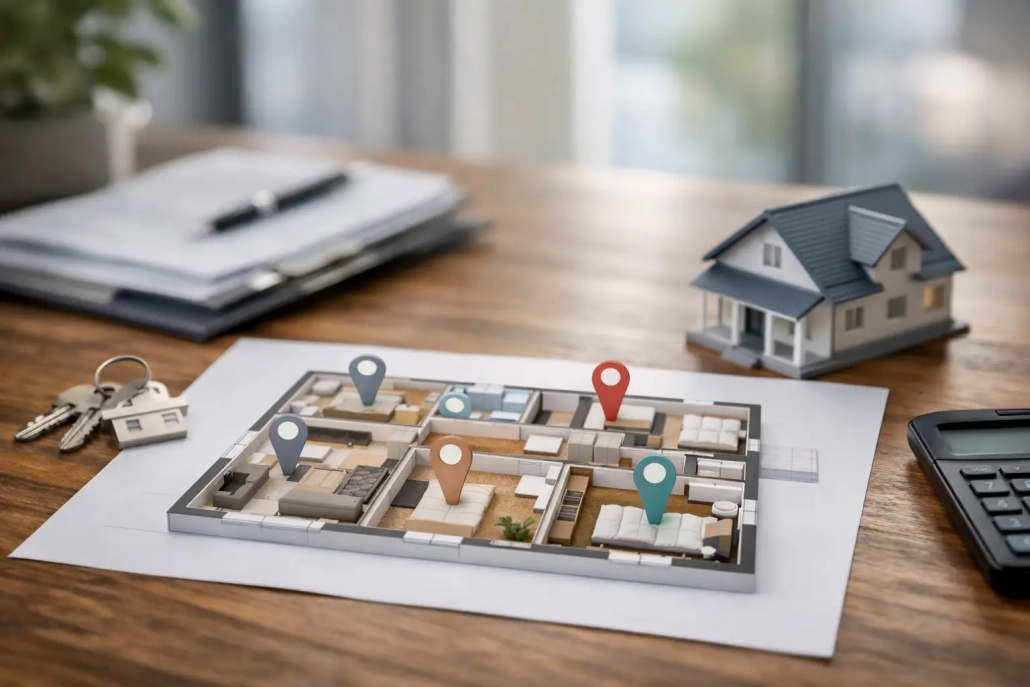
Room Labels Floor Plan Real Estate Value
A buyer clicks into a listing, swipes through the photos, and still asks the same question: How does this home actually flow? That gap is exactly where room labels floor plan real estate assets do their best work. They turn a collection of images into a clear layout story, helping buyers understand the property faster and helping agents generate better-qualified interest.
In a competitive Orlando-area market, clarity is not a small advantage. It directly affects click-throughs, showing activity, and how quickly a buyer feels confident enough to take the next step. A floor plan without labels can still be useful, but a labeled floor plan answers more questions upfront. That matters when buyers are comparing several homes in a single session and making quick decisions about which listings deserve their attention.
Why room labels matter on a real estate floor plan
Photos create emotion. A floor plan creates understanding. Room labels connect the two.
When a buyer sees a room called out as Primary Bedroom, Office, Bonus Room, Breakfast Nook, or Covered Patio, the layout becomes easier to read and easier to remember. Instead of guessing what they are looking at, they can instantly understand function. That reduces friction in the decision process and makes the listing feel more complete.
This is especially valuable in homes with flexible spaces. An unlabeled room may leave buyers unsure whether they are seeing a formal dining room, den, or fourth bedroom. A labeled floor plan removes that uncertainty. It tells the buyer how the home is organized and where each space sits in relation to the rest of the property.
For agents and brokers, that added clarity can improve the quality of inquiries. Buyers who reach out after reviewing a labeled plan are often further along in their decision-making because they already understand the layout. That can lead to more productive showings and fewer wasted conversations.
Room labels floor plan real estate buyers actually use
A floor plan is not just a design asset. It is a sales tool. The reason room labels work so well is simple: buyers use them.
Many buyers do not start by studying dimensions in detail. They start by trying to answer practical questions. Where are the bedrooms? Is the kitchen open to the living area? Is there a separate laundry room? Does the patio connect directly to the main entertaining space? Labels help them get those answers in seconds.
That speed matters online, where attention is limited. Listings compete in a crowded search environment, and the easier a property is to understand, the more likely a buyer is to stay engaged. If the layout is confusing, they move on. If the layout is clear, they are more likely to save the listing, share it, or schedule a showing.
This is also why labeled floor plans work well for rental listings and investor marketing. Renters want to know how a unit is set up before committing time to a tour. Investors want fast visibility into bedroom count, common-area flow, and usable space. Room labels make those decisions easier.
Labels reduce guesswork in key spaces
Not every room needs heavy explanation, but key spaces benefit from precise naming. Bedrooms, bathrooms, kitchens, living areas, dining areas, garages, utility rooms, porches, and flex rooms should be obvious at a glance. In larger homes, upstairs lofts, media rooms, and bonus rooms also deserve clear identification.
The trade-off is that labels should help, not overcomplicate. If every inch of the plan is crowded with text, readability suffers. Strong floor plan design balances enough detail to inform the buyer without making the page feel busy.
Labels support dimensions, not replace them
A good floor plan includes both room labels and dimensions because each serves a different purpose. Labels identify function. Dimensions show scale.
For example, knowing that a room is a Bedroom is useful. Knowing that it measures 12′ x 14′ is what helps a buyer decide whether a king bed fits comfortably. The strongest listing assets combine both, giving buyers a better sense of how they would actually live in the space.
What room labels do for listing performance
Real estate marketing works best when it removes hesitation. A labeled floor plan does that by making the home easier to evaluate before the showing.
That can improve listing performance in several ways. First, it can increase engagement because buyers spend more time with listings that answer practical questions. Second, it can support stronger showing activity because buyers feel more confident that the home matches their needs. Third, it can shorten decision cycles because layout concerns are addressed early instead of becoming objections later.
This does not mean a floor plan replaces strong photography, staging, or pricing strategy. It works alongside them. But when the photos attract attention, the floor plan helps convert that attention into action. That is why more agents now treat floor plans as essential marketing assets rather than optional extras.
Where labeled floor plans make the biggest difference
Some properties benefit from room labels more than others, although the upside is broad across resale and rental listings.
Homes with unusual layouts are an obvious case. If the floor plan includes split bedrooms, multiple living areas, additions, converted spaces, or detached structures, labels bring order to what could otherwise feel confusing. The same is true for townhomes and condos where vertical layout matters and buyers need to understand how floors connect.
Vacant homes also gain a lot from labeled plans. Without furniture or visual cues, rooms can feel ambiguous in photos. A floor plan adds the structure those images may lack. In occupied homes, labels help buyers process the layout even when personal belongings distract from room purpose.
At the higher end of the market, labels help showcase value. Calling out features such as a walk-in closet, butler’s pantry, mudroom, or covered lanai gives buyers a fuller picture of what they are paying for. In rental marketing, labels help prospects assess fit quickly, which can reduce low-intent inquiries.
What makes a room-labeled floor plan effective
Accuracy comes first. If room names, dimensions, or wall placements are off, the asset loses credibility. That is why professional on-site measuring matters. Laser measurement and proper drafting produce a cleaner result than rough, hand-built plans or guesswork pulled from tax records.
Design quality matters too. A floor plan should be easy to read on desktop and mobile, since many buyers first view listings on their phones. Labels should be clear, consistent, and placed where they can be read without clutter. The plan should also look polished enough to support the quality of the listing presentation.
There is also a strategic naming decision in some properties. A flex space may be labeled as Office, Bonus Room, or Den depending on how the property is being positioned. This is where experience helps. The right label should be accurate, marketable, and aligned with how buyers search and think.
Common mistakes to avoid
One common mistake is using vague labels that do not help the buyer. A term like Room tells them almost nothing. Another is over-labeling secondary features while missing the main spaces buyers care about.
A third mistake is treating the floor plan as an afterthought. If it is low resolution, visually inconsistent, or buried in the listing, it will not do much work. To get the full benefit, the plan needs to be professional and presented as a core part of the marketing package.
Why this matters for Orlando and Orange County listings
In a market with a steady mix of local buyers, relocations, investors, and renters, speed of understanding matters. Many prospects are reviewing properties remotely before deciding which homes are worth an in-person visit. A labeled floor plan gives them a faster, more reliable way to qualify the property.
That is particularly useful in Central Florida, where buyers may compare suburban single-family homes, townhomes, condos, and rental properties with very different layouts. The more clearly a listing communicates space, the better it can compete. For busy agents, that means less time explaining basic layout questions and more time working with serious prospects.
For teams focused on measurable performance, this is the real point. Room labels are not just cosmetic. They help listings communicate better, attract better attention, and support faster decisions. That is why companies like PLANtoSELL build room labels and dimensions into professional floor plan services instead of treating them as optional details.
If a listing is worth marketing, it is worth making easy to understand. A buyer should not have to guess how a home lives. Give them the layout clearly, label it well, and let the property make its case faster.

