
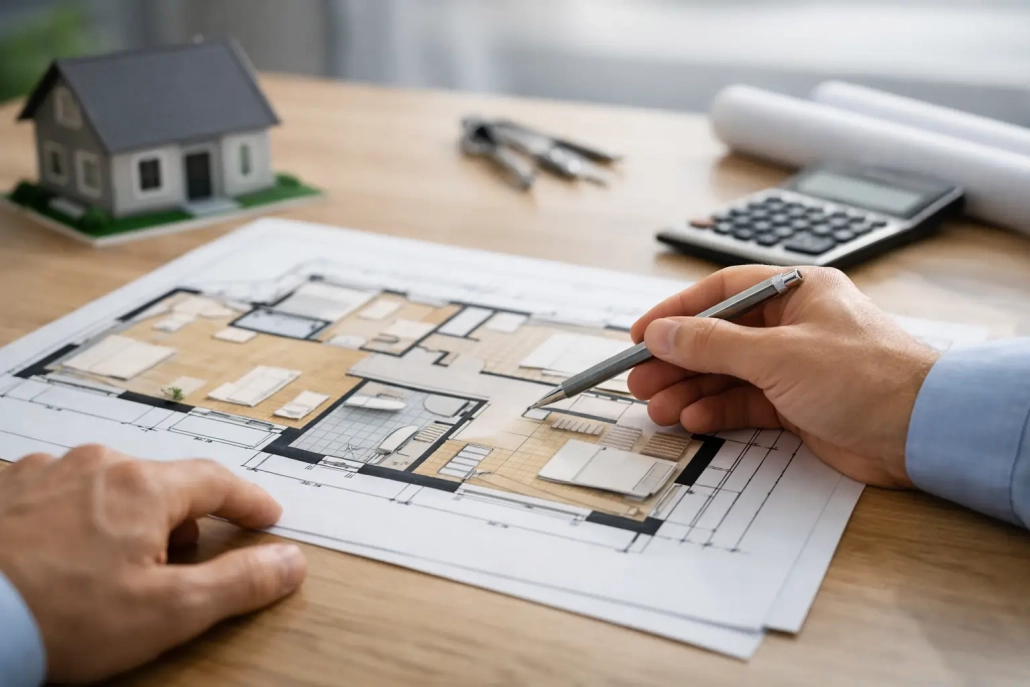
Why Room Dimensions on Floor Plan Matter
A buyer clicks into a listing, likes the photos, then hits the same wall everyone hits: How big is the bedroom really? Will the sectional fit? Is the dining area usable, or just technically there? That is where room dimensions on floor plan graphics stop being a nice extra and start doing real marketing work.
For agents, brokers, property managers, and investors, layout clarity is not a cosmetic detail. It affects how quickly prospects understand the property, how confident they feel booking a showing, and how serious they are when they walk through the door. Photos create emotion. A floor plan with dimensions creates confidence. The two work better together, especially in a competitive market where buyers and renters are filtering fast.
What room dimensions on floor plan graphics actually do
A labeled floor plan gives shape to the listing. Adding dimensions gives it meaning. Without measurements, viewers can see where rooms connect, but they still have to guess at scale. That guesswork creates hesitation, and hesitation costs clicks, showings, and momentum.
When dimensions are included, prospects can answer practical questions on their own. They can compare the primary bedroom to their current setup, estimate whether a home office will function, and decide if the living room supports the way they actually live. That changes the quality of engagement. Instead of attracting broad curiosity, the listing starts attracting people who can picture the property working for them.
This is especially valuable online, where every listing gets seconds to hold attention. If the presentation answers the layout question clearly, buyers stay longer. If it leaves them uncertain, they move on.
Why room dimensions on floor plan assets help listings perform
Real estate marketing is not just about generating traffic. It is about helping the right people move from interest to action. Room dimensions help with that because they reduce one of the biggest friction points in residential listings: uncertainty about usable space.
Photos can make rooms feel larger, smaller, brighter, or tighter depending on lens choice, angle, and staging. That is not necessarily a problem, but it does mean photos alone rarely tell the full story. A floor plan with dimensions balances the presentation with something more concrete.
That matters for resale listings, where buyers are weighing furniture fit, family function, and future flexibility. It matters for rental listings too, where prospects often make fast decisions and need to know whether the layout supports immediate move-in needs. In both cases, dimensions help people self-qualify sooner.
Better self-qualification usually leads to better showings. Prospects arrive with fewer surprises. They have already processed the basic footprint. They are not trying to figure out whether the second bedroom is full-size or whether the breakfast area is actually separate from the kitchen. They can spend the showing evaluating the home, not decoding it.
The difference between room labels and room dimensions
A floor plan that says Primary Bedroom, Bedroom 2, Living Room, and Kitchen is useful. A floor plan that says those things and shows measurements is more persuasive. Labels identify function. Dimensions establish scale.
That distinction matters because many listing decisions happen around scale, not just room count. A three-bedroom home is not automatically competitive with another three-bedroom home if one has a 14 x 16 primary bedroom and the other has a much tighter layout. A den is not equally valuable in every property if one can support a desk and storage while another barely fits a chair.
Dimensions make those differences visible without forcing the prospect to guess or wait for a showing. In a crowded market, that clarity can be the difference between a skipped listing and a saved one.
Where dimensions matter most on a floor plan
Not every viewer studies a floor plan the same way, but certain spaces almost always drive decision-making. Bedrooms matter because people immediately start calculating furniture placement. Living rooms matter because buyers want to understand flow and everyday livability. Kitchens and dining areas matter because they shape how the home functions, even when the exact measurement is less important than the relationship between spaces.
Secondary rooms matter too, especially now that flex space carries more weight. A bonus room, office, loft, or enclosed patio often plays an outsized role in perceived value. If those rooms are dimensioned clearly, the listing does a better job of selling the full utility of the home.
There is also a credibility factor. When a plan includes dimensions throughout, it signals that the listing presentation is complete and professionally prepared. That raises confidence in the asset itself and, by extension, in the listing.
Accuracy matters more than decoration
A polished graphic helps, but precision is what protects the value of the floor plan. If room dimensions are off, even by enough to change furniture fit or room perception, the asset stops helping and starts creating risk.
That is why professionally measured floor plans carry more marketing value than rough sketches or agent-estimated layouts. Laser measurement and clean drafting do more than improve appearance. They create a more dependable tool for buyers, renters, and agents alike.
There is also a practical business case here. Accurate room dimensions reduce confusion before the showing and reduce disappointment during the showing. That saves time. It helps avoid wasted appointments with prospects who would have ruled the property out earlier if the layout had been clearer from the start.
Room dimensions on floor plan graphics and buyer psychology
People make property decisions emotionally, but they justify them logically. Photos, video, and staging trigger the emotional response. Dimensions support the logical one.
Once a prospect likes a home, they start asking proof-based questions. Can this room handle a king bed? Is there enough space between the kitchen and dining area? Could this extra bedroom work as a nursery, office, or guest room? Dimensions help answer those questions at the exact moment interest is building.
That timing matters. If the listing does not supply enough clarity, the buyer either leaves to compare easier listings or delays action until they can gather more information. Both outcomes slow momentum. A well-presented floor plan keeps the decision process moving.
When dimensions can change the value story
Some properties are easy to sell visually. Others need help communicating value. Room dimensions are especially effective in listings where the layout is a selling point but not obvious from photos alone.
That includes homes with split-bedroom plans, unusually large secondary bedrooms, open-concept common areas, converted flex spaces, and additions that expand daily function. In these cases, dimensions help the listing prove what the photos suggest.
They also help with smaller homes, condos, and rentals where efficient use of space is the key selling point. A compact property can perform well when the layout is clear and the room sizes are presented honestly. Buyers and renters do not always reject smaller square footage. They reject uncertainty.
A stronger marketing asset for busy agents
For real estate professionals, room dimensions on floor plan materials are not just for the consumer. They improve the listing package itself. Agents can use them in presentations, digital marketing, flyers, and follow-up conversations with prospects who ask layout questions after seeing the property online.
That creates efficiency. Instead of answering the same sizing questions repeatedly, the agent has a visual asset that handles much of the explanation upfront. It also supports better conversations with out-of-town buyers, relocating renters, and investor clients who rely heavily on listing materials before deciding whether to visit.
In a market where attention is short and competition is constant, stronger assets create practical leverage. They help the listing look more complete, communicate faster, and convert interest into better-qualified inquiries.
What to look for in room dimensions on floor plan services
If the goal is better listing performance, the floor plan needs to be more than decorative. It should be professionally measured, easy to read, clearly labeled, and formatted for both print and digital use. Fast turnaround matters too, because a great asset delivered late is a missed opportunity.
For agents working in and around Orange County, Florida, that means choosing a provider that understands residential marketing, not just drafting. The point is not to create a technical drawing for architects. The point is to create a selling tool that helps listings communicate clearly and convert faster. That is the standard PLANtoSELL is built around.
A floor plan should answer the questions that keep buyers from taking the next step. When room dimensions are accurate, visible, and professionally presented, the listing does more of the selling before the first showing even happens.
If a property has a layout worth understanding, it deserves to be shown in a way that makes that value obvious.

